
John Hughes Retires After 32 Years With Brown CS And 42 At Brown
- Posted by Jesse Polhemus
- on April 28, 2026
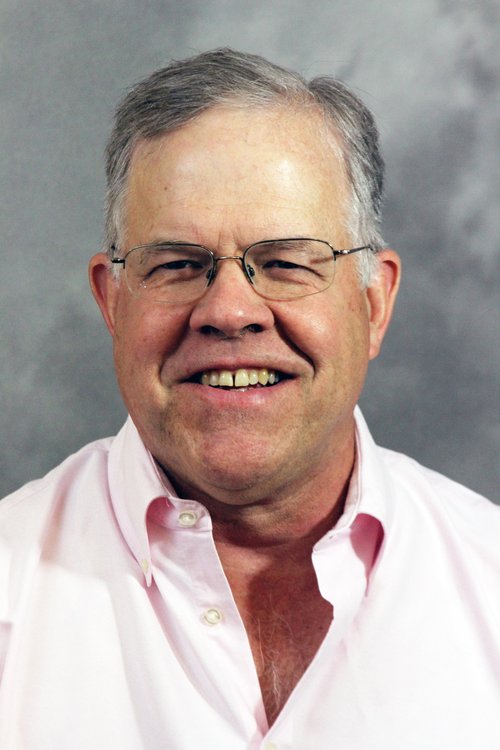
The waves are calling, the blue expanse with its endless opportunities to tinker with oil coolers and hose clamps and heat exchangers, to pull up alongside other sailors at the close of day and be social or not. John “Spike” Hughes is weighing anchor: he’s retiring from Brown after 42 years of teaching, with 32 spent at Brown CS.
Over the years, Spike has often described himself as a mathematician among computer scientists. What does it mean to have been a bit of an outsider for more than three decades? Among other things, it offered something that he prizes: an opportunity to help people learn.
“When I came to Brown,” Spike says, “I discovered that the folks in the Graphics group didn’t know much about, say, linear algebra or differential geometry. I wasn’t brilliant at either of them, but it was a case of the one-eyed man in the kingdom of the blind. In a way, it was my love of those areas of math that got me started down a path in computer graphics. It turned out that for things like shading and coloring and light reflection, what I knew was useful, and I learned a lot quickly while still being able to give something back. That satisfied a general need for me because I really like helping people, being able to tell them that the reason why the top of that squashed cube looks darker than it should is right there in their code. The other fun thing is that after years of teaching computer science, I’ve returned to some old math problems again. It’s satisfying to realize that the things I learned in the course of working in CS are helping me go back and find answers to math questions. There’s a real sense of closure there.”
“I really like helping people, being able to tell them that the reason why the top of that squashed cube looks darker than it should is right there in their code.”
The group of researchers that Spike mentions above, now known as Brown Visual Computing, has taken to referring to itself as “the longest continuously-running graphics group in the known universe”, and their collegiality is easily as well-known as their sense of humor. Is it true that Spike even bought his house from Thomas J. Watson, Jr. University Professor of Technology and Education and Professor of Computer Science Andy van Dam?
“Just after our daughter was born,” he says, “my wife, Cynthia, and I started thinking that it was time to find a house, and one day Andy stopped by: ‘Spike, any chance that you want to buy mine?’ Even after a few weeks of looking around, we didn’t find any place that we liked nearly as well, so we bought it. The house came with the extra advantage that Andy’s wife had done spectacular gardening and landscaping, which was wonderful but also terrifying, because we didn’t know if we could maintain all of it. When a terrible drought came and we couldn’t water for months, the least hardy things died, and we were vastly relieved because it didn’t really happen on our watch.”
“A college friend of mine,” Spike continues, “did a pre-purchase survey of the house to let us know what might need work, and he did such a thorough job that Barb [Meier] and David [Laidlaw] ended up using him when they bought their place. For years afterward, David and I traded off helping each other with home maintenance tasks. So yes, there’s definitely a closeness in Brown Visual Computing! Not just collegiality, but a friendship inside and out of work.”
“I don’t think we’re headed into a world where there won’t be programmers.”
Spike has seen our field change tremendously over the past four decades, but he hints that some of the current seismic shifts may eventually have some positive results.
“The growth in tech has been enormous,” he says. “When I arrived at Brown, there was one tech company, IBM, on the list of the world’s ten most valuable companies. Today, it’s pretty arguable that nine out of the ten are in tech…but US Steel didn’t go away. Over the years, this growth has made a lot of people think that their kids have to have a job in tech. Some of those kids loved studying CS, and some slogged along and did well enough, and were fortunate enough to live in an era when anyone with a CS degree got hired. Those days are probably over -- for now -- but that's also going to change the kinds of CS concentrators we get. If we go back to an era where the people going into computer science are deeply interested in it (or in its overlap with other areas), I think that’ll be great for the students and great for Brown CS. I don’t think we’re headed into a world where there won’t be programmers.”
Looking back, one of Spike’s favorite memories is a sabbatical year that he and his family spent in Grenoble: “It was an amazing experience for us, this kind of idyllic life where we would pick the kids up from school, walk home past the bakery and cheese shop and vegetable shop and pick up a tiny eclair at the confectionery: the perfect neighborhood for learning how to interact in France. At the time, some of my PhD students came to Grenoble and each spent a week or two with us. That was great because it gave me lots of one-on-one time with them, working on pushing their research forward and getting to know them better. That was amazingly satisfying.”
Reflecting on that experience of working intensely with students brings Spike to another memory of collaboration, this time from the 1990s, when he wrote a paper about physically plausible animation with Ronen Barzel (a Brown alum living in Paris and working for Pixar) and Daniel N. Wood, who was a University of Washington doctoral student at the time.
“There’s a problem,” Spike explains, “that if you hit the cue ball on a pool table and it runs into another ball and another, all the balls go where they want to because of the laws of physics, which makes it really hard to make them go where you want them to go for a visual effect. Ronen pointed out something interesting: if you hit a ball and it hits a wall and then another and another, by the tenth time, the accumulated uncertainties make just about any position on the table equally likely. That was the germ of an idea to treat the physical simulation as not one simulation but as a range of simulations.”
“His answer was that we should write the stories that we want to tell….It was an amazing experience….I can’t think of better collaboration.”
“It was a great idea,” Spike remembers, “but we didn’t have many weeks before the deadline, and Ronen started in. ‘Why are you writing,’ I asked, ‘we don’t have any results?’ His answer was that we should write the stories we want to tell, and he’d go off and write beautiful passages until he reached a point where he couldn’t go any farther, then leave a thought box: ‘This is the gist of what I mean, but I don’t know how to say it.’ And I’d go from there, filling in the 'thoughtbox' because I knew exactly how to say the thing he wanted…and then I’d have to stop and make a thoughtbox of my own. It was an amazing experience, because with the time difference it was like having the work done overnight by elves, and Daniel was busy producing and inserting pictures in the same way. I can’t think of a better collaboration.”
Always interested in new ways to collaborate, and in passing on some of Spike’s trade secrets, I ask him for some best practices1 in the hope that future faculty members will find something to emulate.
“One of the ways I feel like I’ve been useful to Brown CS over the past decade,” Spike says, “has been to look at a new idea and say, let’s think about five ways this could go wrong. It comes from my mathematical background: proving theorems is hard, so the first thing you do when you have a conjecture is to spend a few hours trying to come up with a counterexample. That was particularly useful in my role as Associate Chair. On the more positive side, I’ve learned over the years to go ahead and be genuinely enthusiastic when someone says something that seems new and interesting and clever to me. Maybe it’s not perfect, but if the other person is excited about it, they’ll work harder, and by being excited yourself you can nudge them in one direction or another. It’s important to give students free rein to try something even if you’re initially skeptical, because they’ll feel empowered by having been trusted. If it doesn’t work out, they’ll have a chance to reflect on why not! There’s a version of advising where you have a student go off and write a piece of code and then another piece, and you end up creating someone who just does the most boring part of your work for you instead of learning how to think for themself. Instead, I try to give students a little more responsibility than they were expecting and then tell them they can do it. I learned this from Andy, who does it to a huge degree. It’s extremely valuable.”
“I’ve learned over the years to go ahead and be genuinely enthusiastic when someone says something that seems new and interesting and clever to me.”
A few words about sailing feel necessary (students and colleagues sang a bespoke sea chantey to Spike at his last lecture), so I ask Spike to rhapsodize about his many hours out on the waves: “I grew up around boats and I always loved it. Sailing satisfies a bunch of things in me. I like being out on the water, I like tinkering, and one of the consequences of owning a boat that’s 50 years old is that there’s always something to tinker with. There’s a wonderful community of people, but it’s a community that you aren’t obligated to engage with. You go for a sail, you anchor somewhere, there are folks on another boat anchored nearby, and you don’t have to talk to them, but you could if you wanted to. That’s satisfactory to me as a degree of socialness in my activities.”
Even if he’s more of an ambivert than an extrovert, is it possible that Spike’s success as a collaborator is due to his apparent ability to talk to anyone, on virtually any topic?
“My mother would be delighted to hear you say that,” he says. “She was very worried about me when I was an early teenager as just being hopelessly socially awkward. Since then, I’ve occasionally had to have difficult conversations with people, and a lot of the credit there goes to my wife, who taught me that the fear of an unpleasant conversation is often much worse than the unpleasant conversation itself. I don’t particularly have a recipe for how to talk to people except that I like hearing folks talk about things that excite them, and for most people there is such a thing.”
Over the years, Spike found many people willing to talk about their passions at Brown CS.
“Looking back,” he says, “one of the real delights of working here has been learning about what other people in the CIT do. I loved having Stan Zdonik as a next door neighbor and every now and then hearing mandolin music come out of his office. You can knock on any door, talk to someone for a few minutes, and realize they have an interesting sidelight that you never would have imagined. That’s a treat.”
“And I’ve told people for years and years that I’m incredibly fortunate because every day I get up, go to work, and get to do something I’m going to enjoy. The quality of our administrative and technical staff is a big part of that. Just knowing they’ll keep things running smoothly, greasing the gears, has been really great. I can say that I’d like to do this crazy thing, and rather than the answer being no, it’s let’s see how we can work together on that. That’s pretty wonderful.”
It was wonderful working alongside you, Spike. Wishing you fair winds and following seas! We’ll miss you.
For more information, click the link that follows to contact Brown CS Communications Manager Jesse C. Polhemus.
1 “I hate the term best practices,” Spike laughs, “because they’re almost never something that’s been evaluated. Whenever someone has an idea they want people to use, they just say, ‘Ooh, I’ll write this up in a list of best practices.’”


