In addition to other accolades, Professor Shriram Krishnamurthi of Brown CS has been repeatedly recognized in 2021 for his contributions as a reviewer. Koli Calling is one of the leading international conferences dedicated to the exchange of research and practice relevant to the scholarship of teaching and learning and to education research in the computing disciplines. This month, they named Shriram one of four Superb Reviewers who offered consistently excellent feedback to authors and made significant contributions to the discussion. His fellow awardees are Paul Denny (University of Auckland), Stephen Edwards (Virginia Tech), and Juho Leinonen (University of Helsinki).
"Computer systems are the backbone of modern applications," says Brown CS Professor Malte Schwarzkopf, "and the science of building efficient, easy-to-use, and trustworthy computer systems is about discovering key ideas that help make people get more out of their computers. Great ideas in systems have had stunning practical impact on the industry. But systems research, like much of CS research in general, suffers from a lack of diversity: only a handful of papers in the top systems conferences have non-male lead authors."
However, a change may be coming. Thanks to an exploreCSR award from Google, Malte is leading a team …
This report was part of the Rhode Island Data Journalism Project and has been reprinted with kind permission from The Public's Radio. For other news stories, visit https://thepublicsradio.org, download their apps, or tune your radio to 89.3 FM.
Rhodes Technologies and Rhodes Pharmaceuticals, subsidiaries of Purdue Pharma, produced pills and raw opioid ingredients out of a factory complex in Coventry.
by Hal Triedman
Since 2003, Bill Muzzy has lived on Pulaski Street in Coventry, Rhode Island, right next door to a factory compound. Like many of his neighbors, Muzzy knew that the compound made pharmaceutical ingredients. But he …
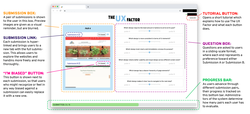
Multiple members of the Brown CS community have returned from the ACM Conference on Computer-Supported Cooperative Work and Social Computing (CSCW) with two honors for their work. Brown CS alums Sarah Bawabe and Laura Wilson, students Tongyu Zhou and Ezra Marks, and Professor Jeff Huang’s paper (“The UX Factor: Using Comparative Peer Review to Evaluate Designs through User Preferences”) has received an Honorable Mention as well as an Impact Recognition Award.
Last spring, Brown CS was chosen from a pool of candidates across Brown University to receive the 2021 DIAP (Diversity and Inclusion Action Plan) Community Award for academic departments. The honor recognizes an academic unit that has used the DIAP as a vehicle to actively create positive change for their department.
Brown CS is glad to announce that applications are open for the Randy F. Pausch '82 Computer Science Undergraduate Summer Research Award, which provides $10,000 annually to support an undergraduate engaged in an intensive faculty-student summer research partnership with the Department of Computer Science.
A virtual event celebrated the legendary Brown University computer science professor for his foundational work in computer graphics and five decades of influential teaching.
Brown CS PhD student Fumeng Yang has just received a Computing Innovation fellowship, which will support her to join Northwestern University as a postdoctoral fellow in 2022. The Computing Innovation fellowship aids recent and soon-to-be PhD computing graduates whose job search was hampered by the continued disruption COVID-19 has had on academic job hiring practices and the economy.
Professor Ritambhara Singh of Brown CS and Brown University’s Center for Computational Molecular Biology has just received the National Human Genome Research Institute (NHGRI)’s Genomic Innovator Award, a highly selective honor for early career scientists. Part of the National Institutes of Health (NIH), NHGRI is bestowing the honor on eleven researchers in the field of genomics this year.
A report by a panel of experts chaired by a Brown professor concludes that AI has made a major leap from the lab to people’s lives in recent years, which increases the urgency to understand its potential negative effects.