
Brown University Master Of Science In Cybersecurity Alum Nick Andersen Becomes CISA’s Acting Director And Deputy Director
- Posted by Jesse Polhemus
- on Jan. 28, 2026
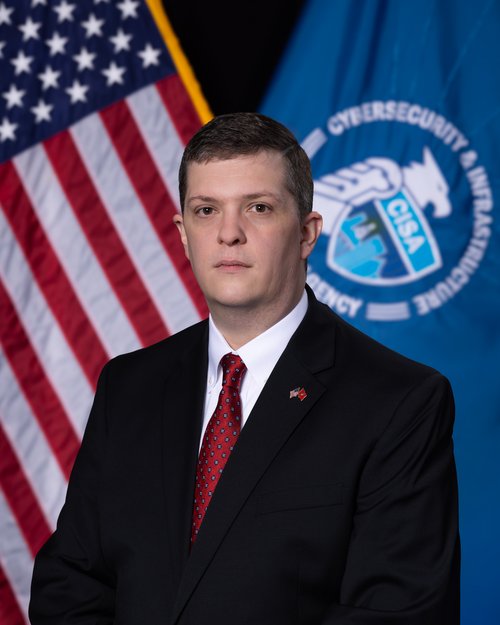
UPDATE: Shortly after this article was published, Nicholas M. Andersen was named the Cybersecurity and Infrastructure Security Agency (CISA)'s Acting Director and Deputy Director.
As the latest step in a career that’s ranged from the Marine Corps to the Department of Energy to serving as Federal Cybersecurity Lead and Senior Cybersecurity Advisor to the White House’s Federal Chief Information Officer, Brown CS Master of Science in Cybersecurity alum Nicholas (Nick) M. Andersen has taken on a prominent new role. Last fall, he was appointed the Cybersecurity and Infrastructure Security Agency (CISA)’s Executive Assistant Director for Cybersecurity, responsible for leading the agency’s mission to address the nation’s most significant cyber threats and vulnerabilities and to increase the security and resilience of critical national infrastructure.
Like many Brown CS alums, Nick’s career has spanned both the private and public sectors, a dual perspective he considers a real strength: “So much of my work depends on collaborating with industry and communicating in plain language, so having experience on both sides is invaluable. But at my core, I love public service. I believe that we all have a responsibility to make our communities better. For me, that means being a good steward of taxpayer dollars and finding ways to deliver more for the common good. Public service gives you the chance to connect with the mission in a profound way and to build stronger partnerships – and that’s what keeps me here.”
Nick believes that explaining cybersecurity to everyday audiences is really about making practical safety recommendations, just like any other advice that helps people stay secure.
“When I was growing up,” he says, “wearing a seatbelt wasn’t the default. It took time as a nation to get us to the point where we all buckle up, and a lot of people were harmed while we were getting there. The public should understand that the longer we fail to treat cyberspace as a matter of national security, the further at risk we put ourselves. There are malicious actors out there, and we need to engage an evolving digital world with new laws and new practices to preserve our infrastructure and our way of life.”
For Nick, the most rewarding part of his new role is the sheer scale of impact., At the Pentagon, it was tough to see how our work touched everyday lives. But as Vermont’s Chief Information Security Officer when a breach happened, I’d be on the evening news explaining which systems were affected and when services would be restored. The next day, someone might stop me in the grocery store to ask about it – and I knew they were counting on what I said. Now my team does that at nation level. The stakes are higher, the mission is bigger and the impact is felt coast to coast.”
“For me,” he continues, “I’ll know we’re making progress a few years from now if neighbors come up to me in the grocery store again, point at my work and say, that’s good government. I want to work on what they want their government to do for them: make moves to secure commerce, let us live our daily lives, not have our essential services degraded by malicious activity in cyberspace.”
Nick credits Brown CS faculty member Timothy H. Edgar for reinforcing the notion of broadening one’s perspective, the most important lesson he learned in the Master of Science in Cybersecurity program: “Tim had a way of framing problems within the larger policy landscape, and that’s been especially helpful to me when I try to frame what I’m thinking and evaluate which policy levers we have to pull. I always say to my team that just because we have a cyber problem, it doesn’t necessitate a cyber solution – maybe we need our colleagues in Treasury or the FBI. Brown taught me to work with people from different backgrounds to articulate why things are the way they are today, to synthesize and question and engage in that discourse.”
The explosive growth of artificial intelligence, Nick feels, only makes it a more exciting time for students to follow his path in computer science or in cybersecurity.
“We have a new world constantly being built around us,” he explains. “Do you want to live in a world being built for you, or do you want to build that world? If so, you need a good understanding of computer science and a good understanding, through cybersecurity, of what will make that world safe. We have nation-states that are driven by a different set of values and wish to do America significant harm. This is our opportunity to shape the tech ecosystem and make sure that we’re aligning technology with our value system.”
In particular, he recommends assembling a breadth of knowledge as well as a depth: “I’d encourage everyone to acquire multiple perspectives, whether through private sector work or going back for another degree. For me, the Master of Science in Cybersecurity was a way to engage people that sharpened and clarified my own thoughts, an opportunity to go back to the well.”
Nick’s greatest hope for Brown CS students is that wherever their career paths take them, they land in a place where they can contribute to the public good.
“Most of all,” he says, “even if it’s only for year or two, I encourage students to try public service in any way possible. There are some fantastic opportunities at CISA and elsewhere in state and local governments, and we need bright people who are willing to perhaps set aside what might be a more lucrative career and help make our nation more secure.”
For more information, click the link that follows to contact Brown CS Communications Manager Jesse C. Polhemus.


