|
|
|
To return to the
theory overview from last class, a key distinction between semiotics (and
most modern cultural theory) and past theories is the distinction between a
classical notion of art as imitation of nature, and image as a revealer of
the truth,
|
|
And a modern notion
of image as a coded communication that one learns to interpret.
|
|
|
|
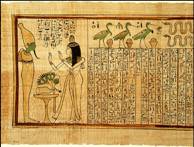
Most
“theory” has as it’s primal assumption the fact that most,
if not all, all images, just like language, need to be interpreted via a code
(English language sentences convey meaning to me because I know the
code—Japanese ones are meaningless to me).
|
|
This process is not
so straightforward as it is with written language however.
|
|
|
|
Our stance,
relationship to next lectures and meaning of “conventional” in
this context (language is pretty nearly entirely conventional vs. imagery
which may not be)
|
|
|
|
|
|
|
|
|
|
___________________
|
|
SOURCES
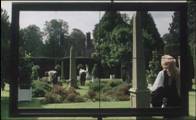
http://petergreenaway.co.uk/draughtsman.htm
|
|
Vasari, a
Renaissance biographer of artists, when speaking of Masacchio said,
|
|
http://www.yale.edu/ynhti/curriculum/units/1986/3/86.03.08.x.html#b
|
|
Gombrich, Psychology
of Illusion—disagrees—use later
|
|
|