
1/27/2005
slide 9

From
Ancient Times:
“The prison-house is the world of sight”
“The prison-house is the world of sight”
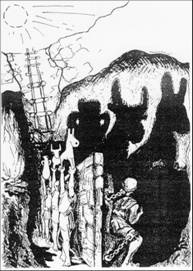
•“Behold! human beings living in a underground den, which
has a mouth open towards the
light and reaching all along the den; here they have been from their childhood, and have their legs
and necks chained so that they
cannot move, and can only see before them, being prevented by the chains from turning round their
heads. Above and behind them a
fire is blazing at a distance, and between the fire and the prisoners there is a raised way; and
you will see, if you look, a
low wall built along the way, like the screen which marionette players have in front of them, over which
they show the puppets.”
•This entire allegory, I said, you may now append, dear
Glaucon, to the previous
argument; the prison-house is the world of sight, the light of the fire is the sun, and you will not
misapprehend me if you interpret
the journey upwards to be the ascent of the soul into the intellectual world according to my poor belief, which,
at your desire, I have
expressed whether rightly or wrongly God knows. But, whether true or false, my opinion is that in the world
of knowledge the idea of
good appears last of all, and is seen only with an effort; and, when seen, is also inferred to be the universal
author of all things
beautiful and right, parent of light and of the lord of light in this visible world, and the immediate source of reason
and truth in the
intellectual; and that this is the power upon which he who would act rationally, either in public or private life must
have his eye fixed. Plato’s
Republic 360BC
•19th c French thinkers: Saussure, Derrida, and others (discussed later)
http://www.zlw-ima.rwthaachen.de/forschung/
publications/question_of_reality.html
publications/question_of_reality.html