
1/27/2005
slide 4
What is the Image Canon?
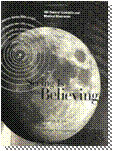
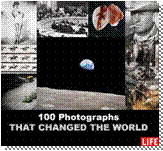
| •Mirriam-Webster: “a sanctioned or accepted group or body of
related works <the canon of great literature>” related to Middle
English usage as “an authoritative list of books accepted as Holy
Scripture” List of books that there is
a consensus about—their importance for understanding Western culture. |
||
| •These lists/documents CHANGE over time: In Jefferson’s time, in terms of the
library that he said every literate person ought to have—filled with Greek
and Latin texts. Probably had few if any works by women or people of color. |
||
| •How much is any canon influenced by popular culture? If you
had a canon defined by lay-people it might have nothing with the canon done
by scholars. From church to High Priest of academia (but a Marxist canon
would differ from Bloom’s). |
||
| •Politics and ideology, some things we’ll be discussing in
their relationship with images, certainly play a role. “Culture Wars” in
academia/education. Certain books banned by religious groups even today: the
Catholic Church’s “index.” People serious about SpongeBob being “outed.” |
||
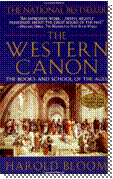
| • Bloom’s “Western canon” and “100 greatest” and other sources for the
key texts of western culture (and others), but what about images? |
||
| •Our attempt is only a beginning of a set of
materials that visually literate people should know about. |
||
| •No clear canon: still quite divided by disciplines and
genres |
||
| there’s survey’s of
art history, but they won’t include such important images as the bombing of
Pearl Harbor or Neil Armstrong landing on the moon. Which have actually
influenced our culture more? And what
about the vast quantity of images from science? (And this doesn’t even begin
to approach non-Western cultures, and sub-cultures here). |
||
| •When should you need to know what about images? Middle
school? high school? College? |
||
| •Just as we would disappointed in a college grad who
couldn't’ tell Shakespeare from Dickens or had no idea who they were ,
so in the future we may be disappointed to talk to college grads who can’t
identify an Rafael or Michelangelo or
Mondrian –or the plumes of smoke from the exploded space shuttle or the
ships sinking in Pearl Harbor… |
||
| •The images you just saw, with captions and explanations,
will be available on the Web site. We’ll be studying many of them during the
semester. We welcome suggestions for other images that should be in this
canon. |
||
| __________________________________________________________ |
||
| SOURCES |
||
| http://www.literarycritic.com/bloom.htm |
||
| (Bloom, Western
Canon) |
||